
Replacing my Wordpress BBQ site with a Vibe Coded Solution.

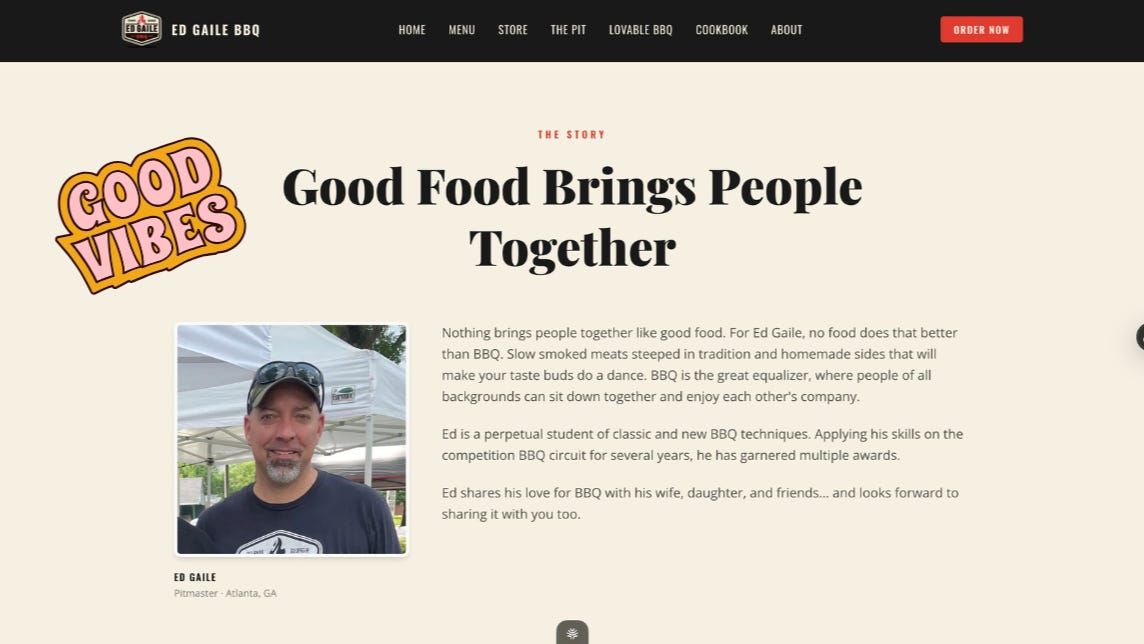
I rebuilt my BBQ business website from scratch in less than 3 days. Here’s what I learned about leaving WordPress behind, and why the math just changed for every small business owner who’s ever been told they need a developer.
When WordPress launched in 2003, it was the closest thing the internet had to “vibe coding.” You didn’t need to know HTML.
You picked a theme, installed a plugin, and your idea was live. For a generation of small business owners, it was the default answer to “how do I get a website?”
I used it for years. It worked. But I never loved it.
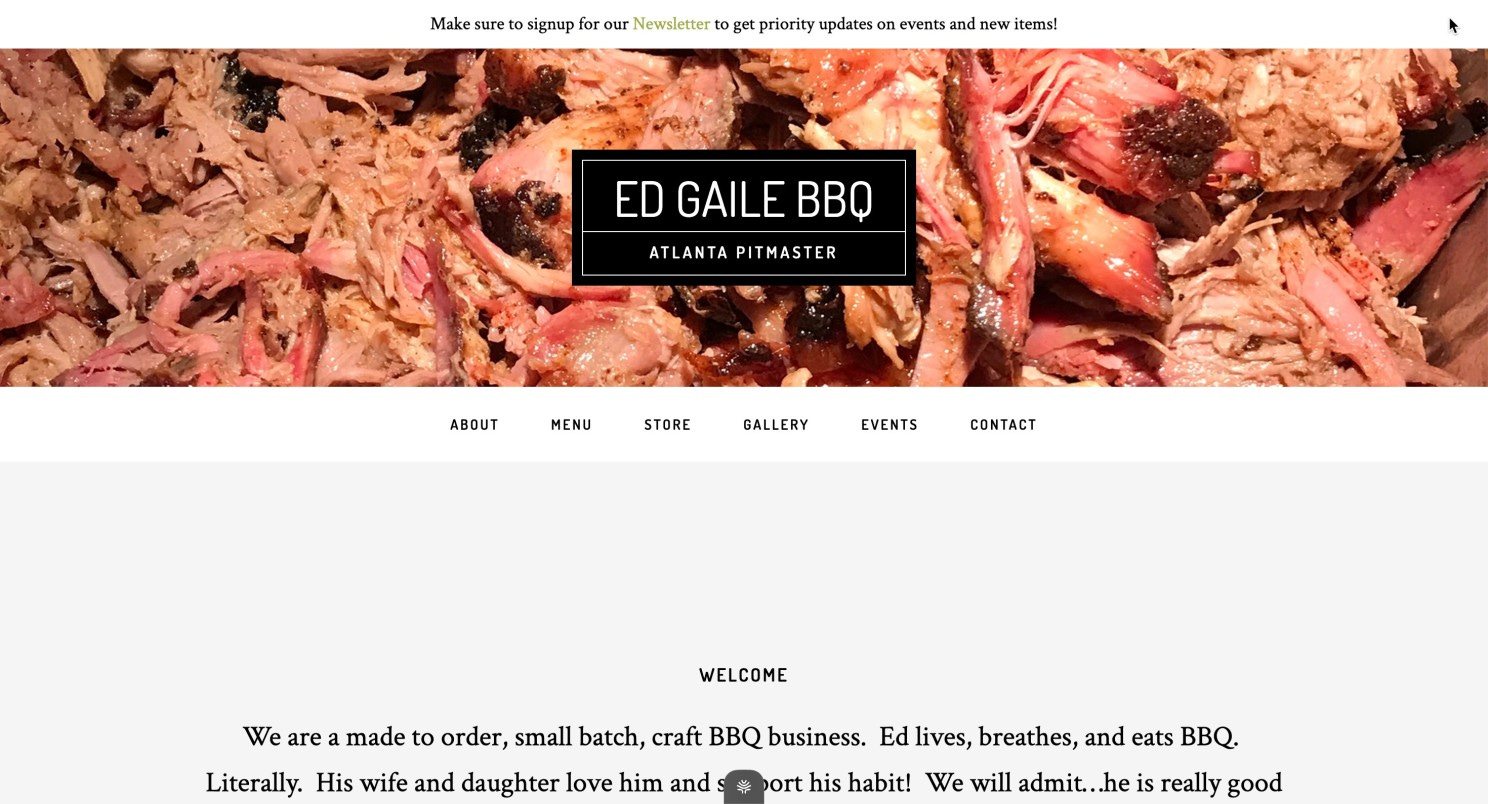
Over the last few weeks I rebuilt the entire web presence for my BBQ business, Ed Gaile BBQ, from a fairly static WordPress site into a custom application running on Next.js, Supabase, and Vercel. It took 3 calendar days. I’m a software engineer by trade, but I haven’t built a serious frontend in years, and I didn’t write most of the code line-by-line. I worked with an AI coding agent the whole way through.
The new site is at edgailebbq.com. Here’s why I made the move and what I learned.
The problem with the old site
Like a lot of small businesses, my web presence had quietly fragmented. The main site was a brochure. The Substack newsletter, “The Pit”, lived on Substack. The iOS app I built, Lovable BBQ, had its own marketing site. The cookbook in progress was talked about everywhere and bookable nowhere. The sauces-and-rubs store sent customers off to a third-party checkout and hoped they came back.
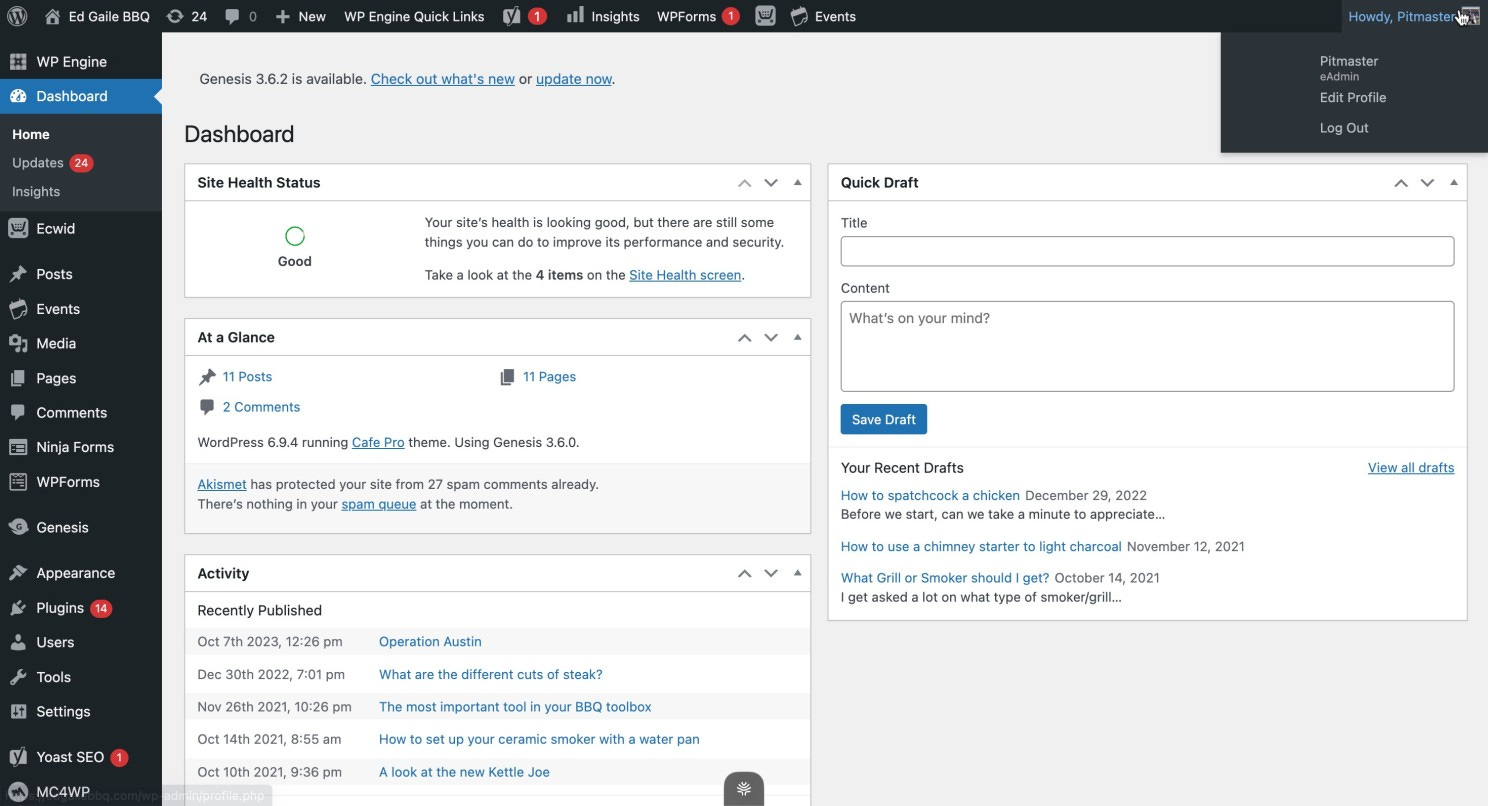
Five different surfaces. No single place to send a curious customer. Updating the menu meant editing a WordPress page.
Adding a testimonial meant editing a WordPress page. Changing a price meant editing a WordPress page. None of it was hard.
All of it was friction.
Why custom, why now?
Two things changed in the last twelve months that flipped the math.
The build economics collapsed. Three years ago, “build a custom site instead of using WordPress” meant hiring a developer or sinking weekends into Stack Overflow. Today, AI-assisted development means a small business owner with a clear vision can sit down with an AI coding agent and ship a real, working site in days. Not a starter template, an actual product, with real features, real data, real integrations.
The “off-the-shelf” gap got worse. WordPress and its peers are still good at the brochure-site case. But the moment you want anything specific: your own data model, your own admin UI, integrations that talk to each other, you’re back to wrestling plugins. The capability gap between “no-code CMS” and “custom” used to be the price of a developer. Now it’s the price of an afternoon conversation with AI.
What I built
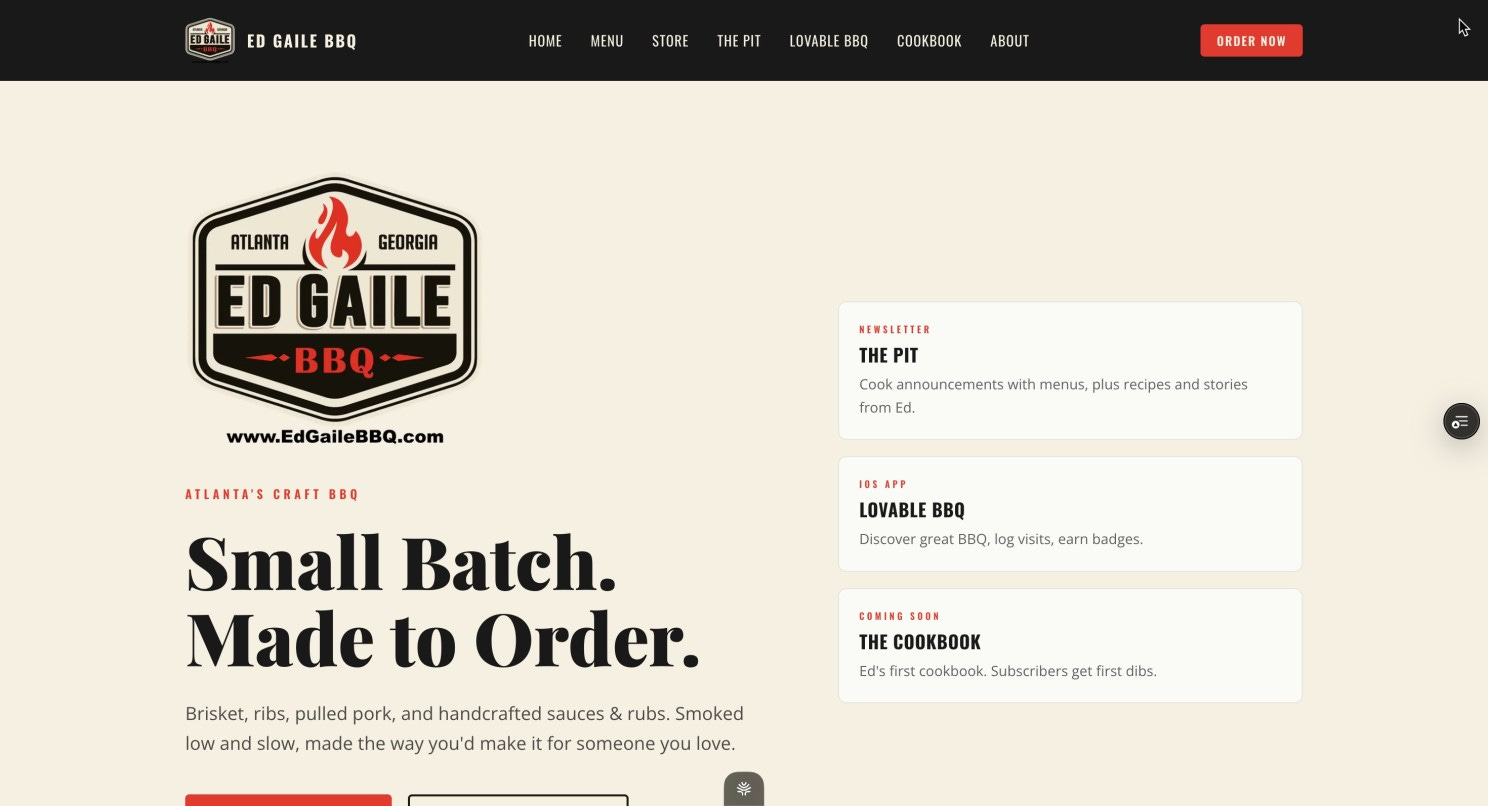
One central hub at edgailebbq.com that pulls every venture together.
Specifically:
A live menu I can edit from my phone. Multi-tier pricing on every item — pulled pork is $15 a pound and $75 for a half pan, on the same dish. Changes publish to the public menu without a redeploy.
A scrolling testimonials marquee on the homepage, fed from a database I control. Add a quote, it’s live.
An embedded Shopify checkout for sauces, rubs, and merch. Customers never get bounced to a different domain to pay.
The Pit page that automatically pulls in my latest Substack posts. Write once, appears everywhere.
A contact form on the menu page and the about page. Submissions land in my admin inbox and email me a copy.
The Cookbook landing routes new signups straight into the newsletter — one list to grow instead of two.
A clean, fast site that loads instantly, looks like my brand (warm cream, brand red, smokehouse signage), and doesn’t make customers think.
The speed was the unlock
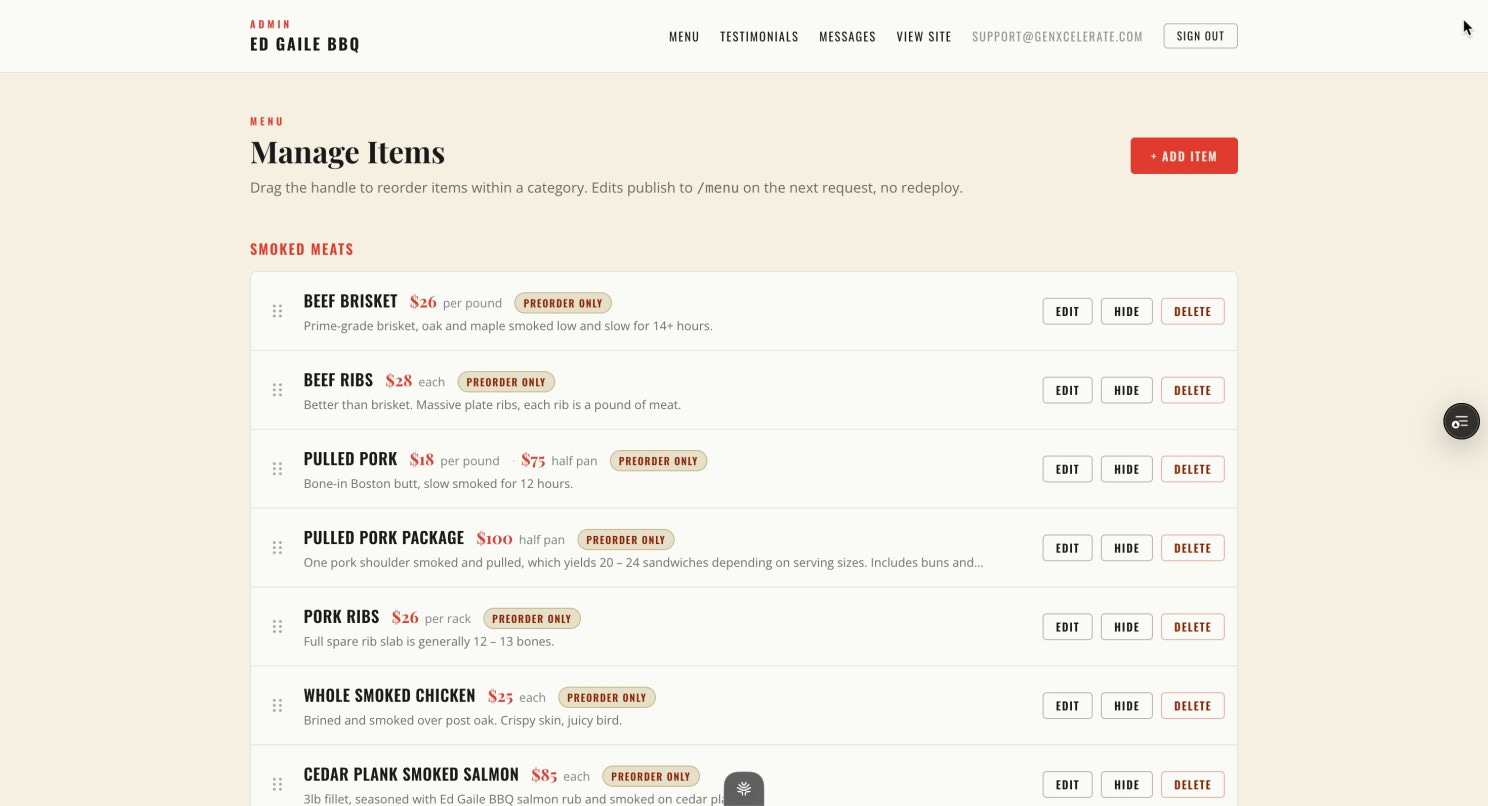
About 30 commits. ~67 files. The kind of changes that would have been a week of WordPress plugin wrestling were a single conversation each. “Add half-pan and full-pan as unit options”, done in fifteen minutes, including the database migration.
“Move the testimonials from the homepage banner to a scrolling marquee, and let me edit them from the admin”, half an afternoon. “Put the contact form at the bottom of the menu page, but make sure the submission stays on that page instead of redirecting”, twenty minutes.
The old version of those tasks looked like: read plugin docs, evaluate three plugins, install one, fight CSS overrides, give up, install a different one. Days, not minutes.
What does this means for small business owners?
WordPress isn’t going away. For a true brochure site, it’s still fine. But it is no longer the default answer for “I need a website but I’m not a developer.”
If you can describe what you want in plain English, you can now build it. Not adjacent to it. Not a watered-down version of it. The actual thing you wanted in your head when you first sketched it on a napkin.
The other half of this, and this is the part I’m most excited about as a business owner, is that I now own the stack. The next feature, whatever it is, is also a single conversation away. The cookbook page, the customer waitlist, the loyalty program I haven’t designed yet. None of those require a redesign or a developer or another monthly subscription. They’re just iterations on something I already have.
For the first time in years of running this business, the website isn’t a thing I have to work around. It’s a thing I get to build with.
If you’re a small business owner sitting on a WordPress site you’ve outgrown, the calculation has shifted. It’s worth a fresh look.
Let me know if you need any help or guidance for your own business.
-Ed
#SmallBusiness #Entrepreneurship #AI #WebDevelopment #BBQ #Atlanta
Looks great Ed and well done especially in three days! I too have spent days on those Wordpress plugins never do what you want!! Sounds like a plan for my website next winter :)